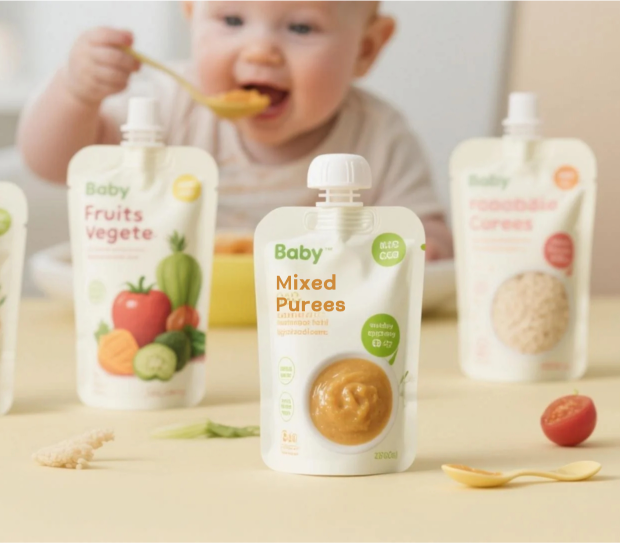
When parents think about clean baby food, they usually focus on ingredients first. They check for added sugar, salt, artificial flavors, preservatives, organic labels, allergens, and heavy metals. Those details matter, but there is another part of baby food that deserves attention too: the packaging.
Packaging is what touches the food before your baby eats it. It protects food during shipping, storage, and daily use. It helps keep purees shelf-stable, snacks fresh, and meals portable. But packaging materials can also affect safety, freshness, exposure, storage habits, and how parents serve food.
At Clean Baby Bites, we believe clean feeding should include both the food and the tools around it. Parents do not need to fear every package, but it helps to understand why materials like plastic, glass, metal, silicone, and paperboard are not all the same.
Packaging Is Part of the Food System
Baby food does not reach your kitchen by accident. It is grown, processed, packaged, stored, shipped, purchased, opened, served, and sometimes refrigerated for later. Packaging plays a role in several parts of that journey.
A good package protects food from contamination, moisture, air, light, damage, and spoilage. It also gives parents important information like ingredients, allergens, nutrition facts, expiration dates, storage instructions, and preparation directions. For condo owners, arranging condominium lead water testing in Manhattan safeguards the tap water used to rehydrate packaged powders and baby cereals.
But packaging is not just a container. Some materials may interact with food, especially when exposed to heat, acidic ingredients, oily foods, long storage times, or damage. This is why parents should think about what the food is stored in and how it is used.
Clean baby food is not only about what is inside the package. It is also about whether the package is safe, practical, and handled correctly.
Plastic Packaging: Convenient but Worth Understanding
Plastic is common in baby food packaging because it is lightweight, flexible, cheap, and hard to break. Pouches, snack bags, lids, squeeze tubes, containers, and some bowls are often plastic or include plastic layers.
Plastic can be useful, especially for busy parents. It makes baby food portable and convenient. But plastic also raises questions about chemicals, heat, wear, and long-term use.
The FDA has information on BPA in food contact applications, noting that regulations were amended so BPA-based polycarbonate resins are no longer used in baby bottles and sippy cups. This shows that food-contact materials are regulated, but it also reminds parents that packaging chemistry matters.
Parents do not need to panic about every plastic package. But it is smart to avoid heating baby food in plastic, avoid using damaged plastic containers, and choose materials carefully for repeated use.
Avoid Heating Food in Plastic
Heat can increase the chance of chemicals moving from packaging into food. This is especially important for baby food because babies are small and developing quickly.
The American Academy of Pediatrics advises families to avoid microwaving or heating food and beverages in plastic when possible. Their guidance on plastic additives also recommends avoiding heating plastics and using alternatives when possible.
A practical rule is simple: if you need to warm baby food, transfer it to glass, ceramic, or another heat-safe container first. Stir well, check the temperature, and make sure there are no hot spots before serving.
Even if a package says microwave-safe, many parents prefer not to heat baby food in plastic. Microwave-safe usually means the container can handle microwave heat without melting under certain conditions. It does not always mean parents should use it as the best daily option for babies.
Glass Jars: Strong for Storage, but Handle Carefully
Glass is often seen as a cleaner packaging option because it does not contain the same plastic additives and does not absorb odors or stains easily. Baby food jars made from glass can be useful because parents can see the food clearly, spoon out portions, and sometimes reuse the jar for storage if cleaned properly.
Glass also has limits. It can break, chip, or crack. A damaged glass jar should not be used. Parents should always check the seal before opening store-bought baby food. If the lid does not pop, the seal seems broken, or the jar is cracked, do not use it.
Glass jars can also be heavier and less convenient for travel. For daycare, stroller bags, or city errands, pouches may be easier. That does not make pouches bad. It just means each material has tradeoffs.
A clean feeding routine can include both glass and plastic packaging, as long as parents handle each one wisely.
Baby Food Pouches: Convenient, but Not Perfect
Pouches are extremely popular because they are lightweight, portable, and easy to pack. For urban parents, daycare bags, travel, and busy errands, pouches can be very helpful.
But pouches are usually made from layered materials, often including plastic and sometimes foil or other barriers. They are designed for convenience and shelf stability, not for long-term reuse. Parents should not heat food in pouches unless the package instructions specifically allow it, and even then, transferring to another container is often a better habit.
Pouches also make it harder for babies to see, smell, and touch the food. If babies suck directly from pouches too often, they may miss some sensory feeding practice. When possible, squeeze the puree into a bowl and serve with a spoon.
For more practical puree guidance, Clean Baby Bites’ recipes and meal ideas page can help parents balance convenience with real-food feeding.
Metal Packaging and Lids
Some baby foods or toddler foods may come in cans, tins, or containers with metal lids. Metal can protect food well, but linings are often used to prevent reactions between food and metal. These linings are part of why food-contact material safety matters.
Parents should avoid using cans or lids that are badly dented, rusted, swollen, or leaking. Damage can affect food safety. Once opened, food should usually be transferred to another container rather than stored in the opened can.
Metal lids on glass jars should also be checked. If the lid is bulging, damaged, or does not seal properly before opening, do not use the food.
Packaging safety includes checking the condition of the package before serving.
Paperboard and Snack Packaging
Many baby snacks come in boxes, bags, or paperboard containers. These packages may seem simple, but they often include inner liners or coatings to protect food from moisture and air.
For dry snacks, packaging helps maintain freshness. But parents should still check expiration dates, ingredient lists, and whether the package is sealed properly. If snacks are stale, damp, or smell unusual, throw them away.
Snack packaging can also make products look healthier than they are. A box may use earthy colors, fruit images, or words like natural and wholesome while still containing added sugar or mostly refined starch. For this reason, packaging design should never replace label reading.
Parents can use Clean Baby Bites’ clean baby foods guide to focus on food quality instead of front-label marketing.
Storage Containers at Home Matter Too
Packaging does not stop when parents open store-bought food. Once baby food is opened or homemade food is prepared, home storage containers become part of the safety system.
For repeated food storage, many parents prefer glass containers, stainless steel containers, or food-grade silicone trays. These materials can be useful because they are durable and easy to clean. Plastic containers can also be used, but damaged, scratched, cloudy, stained, or warped containers should be replaced.
Avoid storing hot baby food directly in plastic. Let food cool first or use glass or stainless steel. Avoid microwaving plastic storage containers when possible.
Clean Baby Bites’ feeding gear page can help parents think through practical gear choices for bowls, spoons, storage, and meal prep.
Food Safety After Opening
Packaging helps keep food safe before opening, but once opened, food needs proper handling. Baby food should not sit out for long periods. If a baby eats directly from a jar or pouch, saliva can enter the container, and leftovers may not be safe to save.
The FDA advises that perishable baby food left out of the refrigerator or without a cold source for more than two hours should not be used. Their guidance on food safety once baby arrives also recommends washing blenders, food processors, utensils, and other items that touch baby food.
A safer habit is to serve a small portion into a bowl and refrigerate the rest immediately. Use clean spoons and follow package instructions for how long opened food can be stored.
Clean feeding is not only about avoiding additives. It is also about preventing bacteria and spoilage.
Packaging and Travel
Parents often rely on packaged baby food when traveling. Pouches, jars, snack cups, and shelf-stable meals can make feeding easier outside the home. But travel can create temperature and handling problems.
If food needs refrigeration, use an insulated bag or cooler with cold packs. Do not leave perishable baby food in a hot car, stroller, or diaper bag for hours. For longer outings, shelf-stable unopened foods may be safer.
The CDC’s emergency feeding guidance recommends having non-perishable store-bought baby food and a cooler or insulated bag for foods that need refrigeration during emergencies or evacuation situations. Their page on infant and child feeding in emergencies is useful for planning.
Urban parents can also visit Clean Baby Bites’ urban parenting and feeding page for feeding ideas that fit city routines.
Packaging and Heavy Metals
Packaging is not the main source of heavy metals in most baby food concerns. Heavy metals like arsenic, lead, cadmium, and mercury usually come from soil, water, and environmental contamination affecting ingredients. However, packaging still matters because clean feeding is about reducing avoidable exposure wherever possible.
The FDA’s Closer to Zero initiative focuses on reducing contaminants in foods babies and young children commonly eat. Parents can support lower exposure by choosing variety, limiting overreliance on rice-based foods, and reading labels carefully.
Packaging cannot fix poor ingredient choices. A glass jar of a rice-heavy product is still rice-heavy. A pouch with simple ingredients may be a good option if used properly. Material matters, but ingredients still matter too.
For more balanced exposure guidance, visit Clean Baby Bites’ avoiding toxins page.
How to Choose Better Packaged Baby Foods
When buying packaged baby food, look at both the food and the package. Choose products with clear ingredient lists, no added sugar, low or no added salt, age-appropriate textures, and packaging that is intact and undamaged.
Avoid swollen pouches, cracked jars, broken seals, dented cans, leaking containers, or products stored in poor conditions. Check expiration dates. Follow storage instructions after opening.
For daily use, consider how the food will be served. If it is a pouch, can you squeeze it into a bowl sometimes? If it is a jar, can you serve a portion and save the rest safely? If it is a snack, is the packaging hiding a sweet or rice-heavy ingredient list?
Smart shopping means looking beyond the front design.
Do Parents Need to Avoid All Plastic?
Parents do not need to avoid all plastic at all times. That is not realistic for most families. Plastic is common in baby products and packaged foods. The practical goal is to reduce higher-risk habits.
Avoid heating food in plastic. Avoid scratched or damaged plastic containers. Do not reuse single-use packaging for long-term food storage. Use glass, stainless steel, or silicone when it makes sense. Read product instructions. Replace worn feeding gear.
A balanced approach is more useful than fear. Families can make better choices without trying to create a perfect plastic-free home overnight.
Final Thoughts
Packaging materials matter for baby food because they touch the food, protect it, affect storage, and influence how parents serve it. Plastic, glass, metal, paperboard, pouches, jars, and home storage containers all have benefits and limits.
Parents should focus on practical safety. Avoid heating baby food in plastic. Check seals and package condition. Use clean containers. Store opened foods properly. Replace damaged plastics. Choose simple foods with clear labels. Use pouches for convenience, but also offer spoon-feeding and texture practice.
Clean baby feeding is not just about ingredients. It is about the whole feeding system: food, packaging, storage, preparation, serving, and routine.
For more practical guidance on clean feeding, visit the Clean Baby Bites blog or explore the Clean Baby Bites FAQ for answers about starting solids, clean baby foods, toxins, feeding gear, and safe feeding routines.