Signs Your Baby Is Ready — and What Readiness Really Looks Like
Starting solids isn’t about hitting a specific age or following a strict schedule. It’s about readiness — and readiness often looks a little different from baby to baby. Most babies are ready sometime around 4–6 months, but the most reliable cues are developmental, not calendar-based.
Common signs of readiness include good head and neck control, the ability to sit with minimal support, and an interest in food. That interest might look like watching you eat, reaching for food, or opening their mouth when a spoon approaches. Just as important is the fading of the tongue-thrust reflex, which allows babies to move food to the back of the mouth instead of pushing it out.
Readiness doesn’t mean your baby will immediately eat a full meal or love everything you offer. Early feeding is about exposure and learning, not calories. It’s normal for the first weeks to involve more touching, tasting, and exploring than actual eating.
It’s also okay if your baby shows some signs but not all. Feeding readiness exists on a spectrum. If something feels unclear, slowing down and observing for another week or two is always an option. There’s no prize for starting early.
In real life — especially in busy urban homes — readiness may show up in short windows between naps, daycare schedules, or sibling chaos. That’s normal. Starting solids doesn’t require elaborate setups or perfect timing. It requires attention, patience, and a willingness to let learning unfold gradually.
Purées vs. Baby-Led Feeding: A Balanced, Real-World View
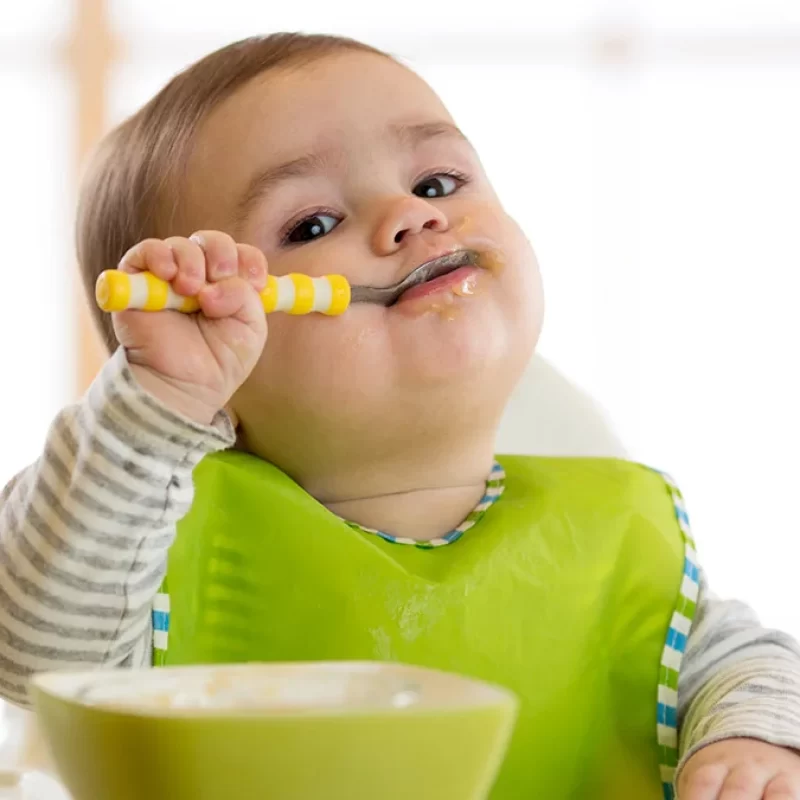
The purées vs. baby-led feeding debate can feel louder than it needs to be. In reality, most families land somewhere in the middle — and that’s not only okay, it’s often ideal.
Purées can be a helpful way to introduce new flavors, textures, and nutrients, especially for younger babies or families short on time. They’re easy to prepare, easy to store, and can be adapted as your baby’s skills grow.
Baby-led feeding encourages babies to explore food with their hands and supports self-feeding skills early on. It can build confidence and curiosity, but it also requires close supervision, appropriate textures, and comfort with mess.
A balanced approach takes the pressure off choosing “the right way.” You might offer a spoon-fed purée one meal and a soft finger food the next. You might start with purées and gradually move toward more textures. You might combine both on the same plate.
What matters most is safety, responsiveness, and variety — not labels. Feeding methods are tools, not identities. Your baby’s needs, your comfort level, and your living space all play a role in what works best.
In small apartments or shared kitchens, flexibility is often key. You don’t need a separate feeding philosophy for every meal — you need options that fit real life.
First Foods, Safe Textures & Introducing Allergens
First foods don’t need to be exotic or complicated. Simple, single-ingredient foods with soft, safe textures are often the best place to start. Think well-cooked vegetables, soft fruits, plain yogurt, oatmeal, lentils, or mashed beans.
Texture matters more than variety in the beginning. Foods should be soft enough to mash easily between your fingers. As skills develop, textures can gradually become thicker, lumpier, or more textured.
Introducing common allergens can feel intimidating, but it doesn’t have to be dramatic. Small amounts, offered early and repeatedly, are often recommended. This can be done using smooth nut butters thinned with water or yogurt, egg mixed into familiar foods, or allergen-containing snacks designed for babies.
The key is calm exposure, not pressure. Introduce new foods earlier in the day when you can observe your baby, and keep portions small. Most reactions are mild, and familiarity builds over time.
CleanBabyBites focuses on practical safety — not fear. Avoid foods that are hard, round, sticky, or difficult to manage, and always supervise closely. Babies learn by doing, and part of that learning includes gagging, facial expressions, and mess.

Real-Life Feeding: Small Spaces, Refusals & Realistic Expectations
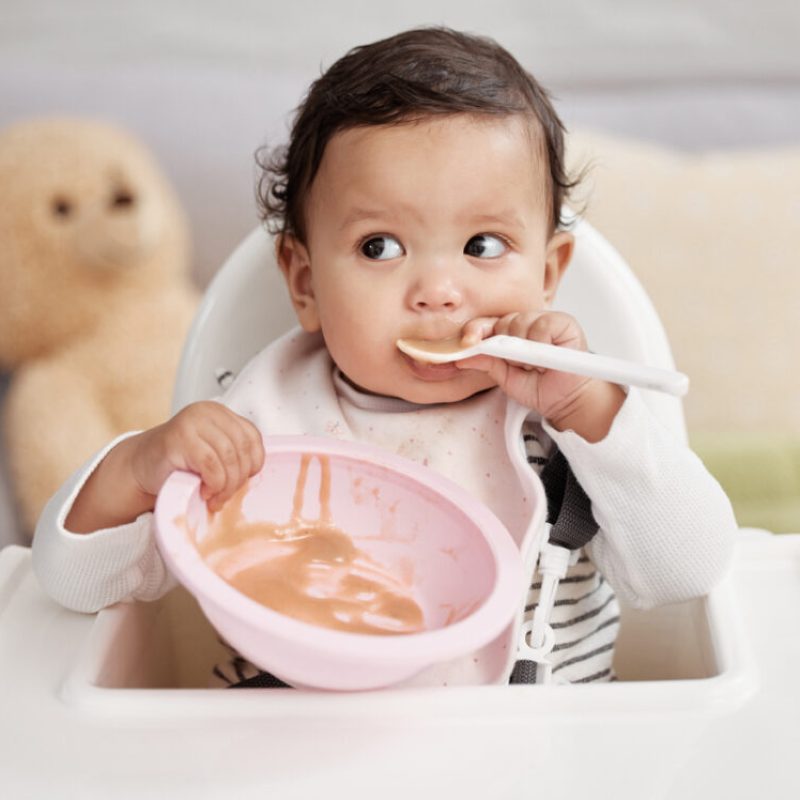
Starting solids in a small apartment looks different than it does in picture-perfect kitchens — and that’s okay. Feeding can happen at a high chair, a booster seat, or even on a mat on the floor. What matters is stability, supervision, and comfort.
Food refusal is normal. Babies may reject foods repeatedly before accepting them. This isn’t failure — it’s learning. Taste preferences develop slowly, and repeated exposure matters more than immediate success.
Mess is part of the process. Food will end up on the floor, the walls, and occasionally in your hair. Progress is rarely linear. Some days your baby eats enthusiastically; other days, nothing touches their mouth. Both are normal.
Early feeding is about building familiarity, skills, and trust — not perfect meals. Keeping expectations realistic helps reduce stress for everyone involved.
Clean baby feeding isn’t about perfection. It’s about consistency, safety, and flexibility. If feeding feels manageable most of the time, you’re doing it right.