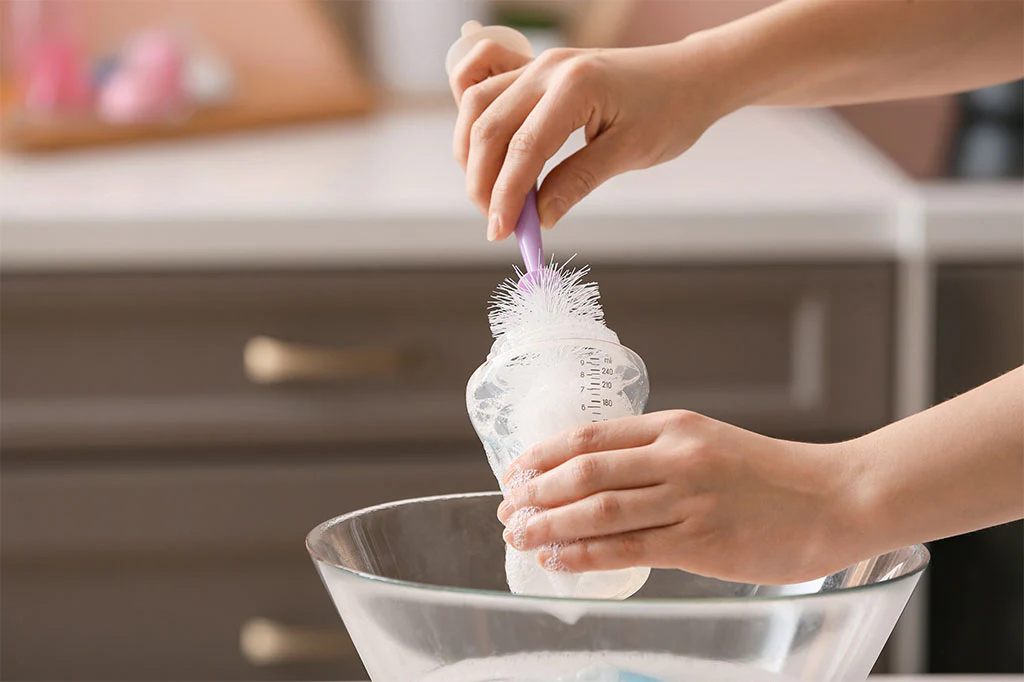
Cleaning baby bottles sounds simple until you are doing it several times a day in a small older apartment. Many NYC families deal with narrow sinks, limited counter space, older plumbing, small dish racks, shared laundry-style routines, hard water spots, old cabinets, and kitchens that were not designed for modern baby feeding supplies. When bottles, nipples, pump parts, drying racks, formula containers, pacifiers, and baby dishes pile up, cleaning can become stressful fast.
But clean bottle care does not need to be complicated. The safest routine is consistent: wash hands, separate bottle parts, rinse, wash with hot soapy water or dishwasher when appropriate, air-dry fully, store in a clean place, and sanitize when needed.
At Clean Baby Bites, we believe clean feeding includes more than food. Bottles, cups, spoons, bowls, and storage tools all touch what your baby eats or drinks. In older NYC apartments, a good cleaning routine helps reduce germs, buildup, and avoidable exposure while keeping daily life realistic.
Why Bottle Cleaning Matters
Babies are still developing their immune systems, so clean feeding items matter. Milk, formula, and breast milk residue can spoil quickly and create a place for bacteria to grow. Bottle nipples, rings, caps, valves, and pump parts can also trap liquid in small spaces.
Proper cleaning helps remove milk residue, germs, and buildup. Sanitizing adds an extra safety step by reducing germs further, especially for younger babies or babies with higher health risks.
The CDC’s guide on cleaning, sanitizing, and storing infant feeding items recommends taking apart bottle parts, rinsing them, washing them thoroughly, and allowing them to air-dry completely.
A clean bottle routine is one of the most important parts of safe baby feeding.
Start with Clean Hands
Before touching bottles, nipples, pump parts, or prepared feeds, wash your hands with soap and water. This step is easy to skip when the baby is crying or you are rushing, but it matters.
Hands touch phones, door handles, stroller handles, elevator buttons, packages, sinks, counters, and bags. In a city apartment routine, hands can pick up germs quickly. Washing hands before bottle prep and cleaning helps reduce what gets transferred to feeding items.
Keep soap near the sink if possible. If counter space is limited, use a wall-mounted soap dispenser or small refillable bottle to avoid clutter.
Clean hands are the beginning of clean feeding.
Take Every Bottle Apart
Bottles should be fully disassembled before washing. Remove the nipple, collar or ring, cap, valve, vent, straw, or any other removable part. Milk can hide in tiny spaces, especially in anti-colic bottles and straw-style parts.
Do not wash a bottle while it is still assembled and assume water will reach every area. It usually will not. Small parts need direct washing and rinsing.
If your bottle has many pieces, keep the manufacturer’s instructions nearby or take a photo of the assembled bottle so you remember how it goes back together. Some parents keep a small basket for parts so nothing disappears down the sink.
For more practical feeding tools and setup ideas, visit Clean Baby Bites’ feeding gear guide.
Rinse Bottles Soon After Feeding
If you cannot wash bottles immediately, rinse them soon after use. This helps prevent milk from drying inside the bottle and nipple, which makes washing harder later.
In older NYC apartments with small sinks, rinsing right away also prevents bottle clutter from becoming overwhelming. A quick rinse takes less time than scrubbing dried formula or milk residue later.
Do not leave used bottles sitting out for long periods with milk inside. If you are out of the apartment, carry a separate wet bag or container for used bottle parts and wash them properly when you get home.
Rinsing is not the same as washing, but it makes proper washing easier.
Use a Dedicated Bottle Brush
A dedicated bottle brush helps clean inside bottles and around curves where residue can stick. Use a smaller nipple brush for nipples, valves, and tight spaces.
Try not to use the same sponge or brush you use for greasy adult dishes. Kitchen sponges can hold bacteria, and baby bottle parts deserve a cleaner tool. Let the bottle brush air-dry between uses and replace it when it becomes worn, dirty, or smelly.
In small kitchens, choose a brush that can stand upright or hang to dry. Keeping it dry matters because wet tools can become unpleasant quickly.
A clean brush is part of a clean bottle system.
Wash in a Clean Basin if the Sink Is Old
Older apartment sinks may be stained, scratched, slow-draining, or used for many tasks. If your sink is not easy to keep clean, use a dedicated wash basin for baby bottles.
The CDC recommends washing infant feeding items in a clean basin used only for infant feeding items rather than placing them directly in the sink. Their guidance on washing infant feeding items explains that sinks can contain germs that may contaminate bottle parts.
A small plastic or stainless basin can fit inside the sink and be stored under the counter when not in use. Wash and air-dry the basin after use.
This is especially useful in older NYC apartments where sinks are small or shared with heavy cooking cleanup.
Use Hot Soapy Water
Wash bottles and parts in hot soapy water. Scrub inside the bottle, around the rim, inside the nipple, around rings, and inside any valves or vents. Squeeze water through nipple holes to make sure they are clear.
After washing, rinse every part well under running water. Soap residue should not remain on baby feeding items.
Choose a dish soap that rinses clean and is suitable for baby items. You do not need heavily scented soaps. Simple and effective is best.
Clean Baby Bites’ avoiding toxins page can help parents think about reducing unnecessary exposure in feeding routines.
Dishwasher Cleaning Can Work
If your apartment has a dishwasher, it can be useful for bottle cleaning if the bottles and parts are dishwasher-safe. Check manufacturer instructions first.
Place small parts in a closed dishwasher basket or mesh bag so they do not fall to the bottom. Use hot water and a heated drying cycle or sanitizing cycle if available. Make sure parts are fully dry before storing.
The CDC notes that if feeding items are dishwasher-safe, they can be cleaned in a dishwasher, and using hot water plus a heated drying cycle or sanitizing setting can help with cleaning and sanitizing.
Not every NYC apartment has a dishwasher, so handwashing is still completely fine when done carefully.
Air-Dry Completely
After washing, place bottles and parts on a clean towel or drying rack and let them air-dry fully. Do not dry bottle parts with a used kitchen towel, because towels can transfer germs.
In small apartments, drying space is often the hardest part. A compact vertical drying rack can help. Some parents use a clean tray that can be moved when counter space is needed. Others use a wall shelf or small rack near the sink.
The important thing is airflow. Bottle parts should not sit wet in a closed container, drawer, or cabinet. Moisture can encourage odor and buildup.
Dry fully first, then store.
Store Bottles in a Clean, Dry Place
Once bottles and parts are completely dry, store them in a clean cabinet, covered container, or dedicated drawer. Avoid storing clean parts next to trash cans, cleaning supplies, dirty dishes, or damp sink areas.
In older apartments, cabinets may be dusty or musty. Wipe the storage area regularly. If cabinets smell damp, consider using a clean covered container for bottle parts.
Do not assemble bottles while still wet and then store them sealed. Trapped moisture can create odor or bacterial growth.
Clean storage is just as important as clean washing.
When to Sanitize Bottles
Sanitizing is an extra step after washing. It reduces germs further, but it does not replace washing. Bottles and parts should be cleaned first, then sanitized if needed.
The CDC recommends sanitizing feeding items at least daily if your baby is younger than 2 months, was born prematurely, or has a weakened immune system. For older healthy babies, daily sanitizing may not be necessary if items are cleaned carefully, but parents should follow pediatric guidance.
Sanitizing methods may include boiling, steaming, or using a dishwasher sanitizing cycle if available and approved for the items.
Ask your pediatrician if you are unsure how often to sanitize, especially if your baby has medical needs.
Boiling Bottles Safely
Boiling is a common sanitizing method. Place clean bottle parts in a pot, cover with water, bring to a boil, and boil for the recommended time based on guidance and product instructions. Then remove with clean tongs and air-dry on a clean surface.
In small NYC kitchens, boiling can be practical but takes attention. Do not leave the pot unattended. Make sure bottle parts are heat-safe before boiling. Some parts may warp if boiled too often or if they are not designed for that method.
Let everything cool before handling.
Boiling is simple, but always follow the bottle manufacturer’s instructions.
Steam Sanitizers
Steam sanitizers can be useful for parents who sanitize often, but they take up space. In small apartments, consider whether you truly need one before buying.
A microwave steam bag or compact electric sterilizer may help if your baby needs daily sanitizing. But if counter space is extremely limited and your baby does not need frequent sanitizing, careful washing and occasional boiling may be enough depending on your pediatrician’s advice.
Before using steam products, check that the bottle parts are safe for steam sanitizing. Follow instructions exactly.
The best gear is the gear that fits your home and routine.
Watch Out for Hard Water Buildup
Some NYC apartments may have mineral spots or buildup on bottles, especially if water dries on them. Hard water spots are not the same as milk residue, but they can make bottles look cloudy.
To reduce spots, rinse well and air-dry with good airflow. If buildup becomes a problem, check bottle manufacturer instructions for safe cleaning methods. Avoid harsh chemicals or cleaners not intended for baby feeding items.
If a bottle stays cloudy, smells sour, feels sticky, or does not seem clean after washing, replace it.
Clear, odor-free, intact bottles are easier to trust.
Replace Worn Bottle Parts
Bottle nipples and parts wear out over time. Replace nipples that are cracked, sticky, swollen, torn, discolored, or flowing too fast. Replace bottles that are scratched, cloudy, cracked, or damaged.
Damaged parts can be harder to clean and may not work safely. If your baby is teething and chewing nipples, check them more often.
Plastic bottles should also be replaced if they become scratched or warped. Avoid heating bottles in plastic when possible, especially if they are old or worn.
For more guidance on materials, visit Clean Baby Bites’ clean feeding gear page.
Be Careful with Older Plumbing
Older NYC apartments may have older plumbing, and some parents worry about water quality. If you are concerned about lead or old pipes, check local water guidance, building information, or ask your pediatrician for advice.
Use cold tap water for preparing formula or washing items, not hot tap water. Hot water can pick up more substances from plumbing. If water needs to be warmed, start with cold water and heat it separately.
If using formula, follow the formula label and pediatric guidance for water preparation. Some families may choose filtered water depending on their building and local recommendations.
Water safety is part of clean feeding, especially in older buildings.
Keep Formula Prep Separate from Bottle Washing
If possible, create a small clean area for formula or milk preparation separate from dirty dishes. In tiny kitchens this may simply mean wiping one section of counter before use and keeping clean bottles away from the sink.
Wash and dry your hands before preparing formula. Use clean bottles. Follow the formula instructions exactly. Do not guess water-to-powder ratios.
The FDA provides information on safe handling of infant formula, including reminders about cleanliness and preparation.
Even in a small apartment, a clean prep routine can reduce risk.
Pump Parts Need Care Too
If you pump breast milk, pump parts that touch milk need careful cleaning. Take apart pump parts, rinse, wash, air-dry, and store safely according to CDC and manufacturer instructions.
Do not toss pump parts into the sink with dirty dishes. Use a dedicated basin if possible. Let parts air-dry fully before storing.
If your baby is premature, under 2 months, or immunocompromised, ask your healthcare provider about sanitizing pump parts daily.
Bottle cleaning and pump cleaning should be treated as part of the same clean feeding system.
Small-Space Drying Ideas
Older NYC apartments may have almost no counter space. A large bottle drying rack may not work. Try compact solutions:
A vertical drying rack.
A small clean tray.
A wall-mounted drying shelf.
A collapsible rack.
A clean towel area used only for baby feeding items.
The goal is to keep clean bottle parts off dirty counters and allow them to dry fully. Avoid storing wet parts in closed cabinets.
Clean Baby Bites’ urban parenting and feeding page offers more ideas for feeding in compact homes.
Do Not Overcrowd the Sink
When bottles pile up with adult dishes, cleaning becomes harder. Try rinsing bottles immediately after use and washing them in smaller batches. This prevents dried milk residue and reduces clutter.
If you bottle-feed often, having enough bottles for a day can help, but too many bottles can also create a mountain of washing. Find a balance that fits your apartment and schedule.
A small, repeatable routine is better than waiting until every bottle is dirty.
Avoid Strong Cleaning Chemicals Near Feeding Items
Keep bleach, sprays, drain cleaners, and other household chemicals away from bottle storage and drying areas. If you use cleaning products near the sink or counter, rinse surfaces well before placing baby items nearby.
Do not use bleach or household cleaners directly on bottles unless following a specific approved sanitizing method and rinsing or preparing exactly as directed by reliable guidance. For everyday bottle washing, hot soapy water is the standard.
Clean feeding should reduce unnecessary exposure, not add it.
Pack Bottles Safely for Daycare
If you send bottles to daycare, make sure they are clean, labeled, and transported safely. Use an insulated bag with cold packs if needed. Follow daycare rules for prepared formula, breast milk, labeling, and storage.
Label bottles with your baby’s name and date. Ask the daycare how they store and warm bottles. If you prefer certain warming methods or bottle materials, discuss that with them.
For more daycare meal and feeding ideas, visit Clean Baby Bites’ blog.
Final Thoughts
Cleaning baby bottles properly in older NYC apartments is all about creating a simple, consistent system. Wash hands first. Take every bottle apart. Rinse soon after feeding. Wash with hot soapy water in a clean basin if your sink is old or busy. Use a dedicated bottle brush. Rinse well. Air-dry fully. Store in a clean, dry place. Sanitize when needed based on your baby’s age, health, and pediatric guidance.
Older apartments may bring small sinks, limited counters, older plumbing, and less storage, but safe bottle cleaning is still possible. Use compact tools, keep baby items separate from dirty dishes, avoid heating in plastic when possible, and replace worn bottle parts.
Clean feeding is not only about what goes into the bottle. It is also about how the bottle is cleaned, dried, stored, and used every day.
For more practical baby feeding guidance, visit the Clean Baby Bites FAQ or explore Clean Baby Bites resources on clean foods, feeding gear, starting solids, avoiding toxins, and urban feeding routines.