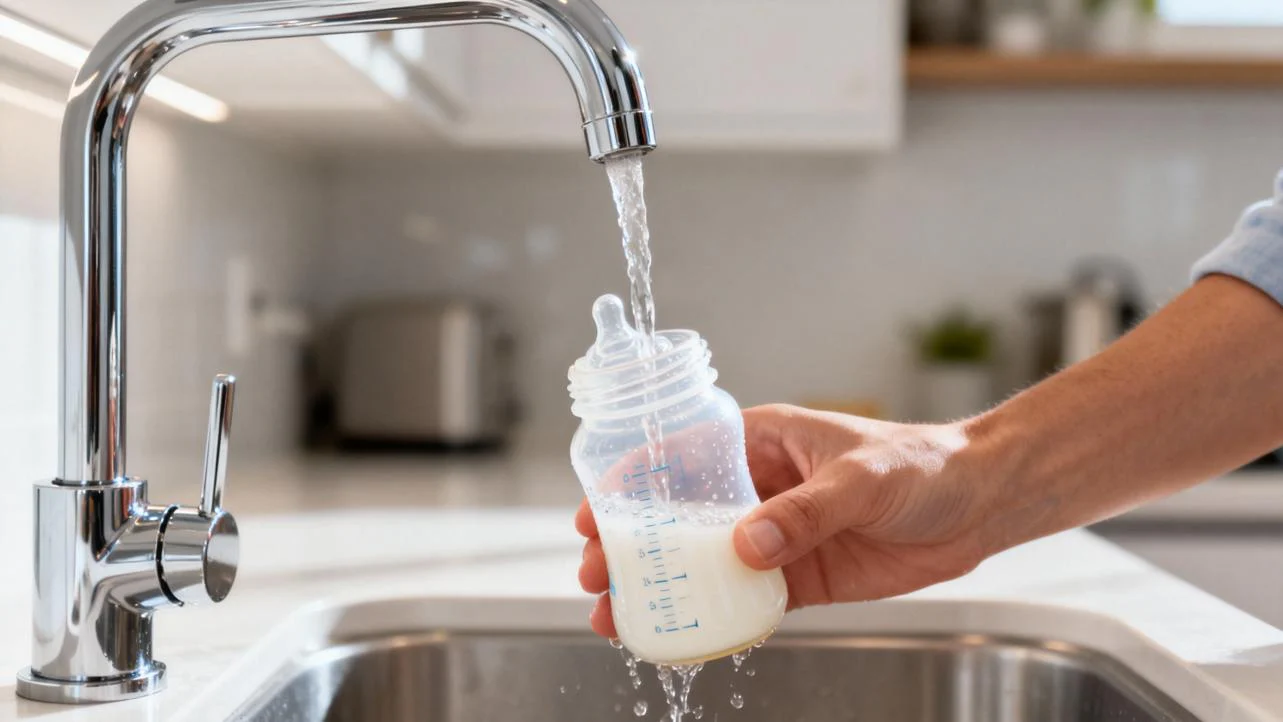
Mixing baby formula seems simple: add water, add the right amount of formula, shake or stir, and feed. But for families living in older homes, city apartments, brownstones, walk-ups, or buildings with aging pipes, the water source deserves extra attention. Old plumbing can affect formula mixing because water may pick up lead or other metals from pipes, fixtures, solder, or service lines before it reaches the tap.
This does not mean every older home has unsafe water. It also does not mean parents should panic. But babies are small, developing quickly, and may drink formula several times a day. If formula is mixed with tap water, water quality becomes part of the feeding routine.
At Clean Baby Bites, we believe clean feeding should include practical water safety habits. Parents do not need complicated systems. They need clear steps: use cold water, know when to test, avoid boiling as a lead solution, clean faucet aerators, choose certified filters when needed, and follow formula instructions carefully.
Why Plumbing Matters for Formula
Formula-fed babies may consume a lot of water through prepared formula. If the water contains lead or other contaminants, that exposure can repeat multiple times each day. This matters more for babies than adults because babies have smaller bodies and developing brains.
Old plumbing can contribute to lead exposure when water sits in pipes, service lines, solder, or fixtures that contain lead. Lead is not usually visible, and water with lead may look, smell, and taste normal.
The EPA explains that lead service lines can be a major source of lead in drinking water and advises using only cold water for drinking, cooking, and making baby formula. It also notes that boiling water does not remove lead.
For parents, the key point is simple: if you use tap water for formula, the plumbing between the water main and your bottle matters.
Use Cold Tap Water Only
One of the most important habits is using cold tap water for formula mixing. Do not use hot tap water to save time. Hot water can dissolve lead more quickly than cold water and may carry higher levels of lead from plumbing.
The EPA specifically says to use only cold water for drinking, cooking, and making baby formula, and it warns that boiling water does not remove lead. The CDC also states that warm or hot tap water can have higher lead levels and that boiling it will not reduce lead.
A safer routine is to start with cold water, then heat it separately if needed. If warming formula, follow the formula label and pediatric guidance, and always test the temperature before feeding.
Let Water Run Before Using It
Water that sits in pipes for several hours may pick up more metals from plumbing. In older buildings, this can matter overnight or after the tap has not been used for a while.
If you are using tap water, let the cold water run before collecting it for formula. Some families run it until it feels noticeably colder. This helps flush water that has been sitting in the pipes.
This is especially relevant in older apartments, brownstones, or homes where plumbing may be outdated. If your building has known lead service lines or uncertain plumbing, testing and filtering become even more important.
Clean feeding is often about small habits repeated every day.
Boiling Water Does Not Remove Lead
Many parents think boiling water makes it safer for formula. Boiling can help with certain germs when water safety is uncertain, but it does not remove lead. In fact, if water boils down, contaminants like lead can become more concentrated.
The EPA and CDC both warn that boiling water does not remove lead from water.
This is important because formula safety has two different issues: germs and chemical contaminants. Boiling may help with germs in some situations, but it does not solve lead in water. If lead is a concern, parents should use bottled water certified as safe, a filter certified to remove lead, or another safe water source recommended by local authorities or a pediatrician.
Know When Bottled Water Makes Sense
If you believe your tap water is unsafe, CDC guidance says to use bottled water to prepare formula until local authorities say the water is safe. If tap water is the only option, CDC advises making it safe by boiling or disinfecting it for microbial concerns, then letting it cool before mixing formula.
However, if the concern is lead, boiling is not the solution. In that case, parents may need bottled water or a certified lead-removing filter. If you are unsure whether your issue is germs, lead, or another contaminant, check local water guidance and ask your pediatrician.
HealthyChildren.org from the American Academy of Pediatrics says tap water can generally be used for formula unless there is known contamination of the local water source, but parents should use a safe water source as defined by local or state authorities.
The safest choice depends on your local water and your building.
Consider Testing Your Water
If you live in an older building, testing can give you more confidence. Lead cannot be seen, smelled, or tasted in water, so testing is the only way to know whether lead is present at concerning levels.
This is especially important if your home has old pipes, lead service lines, older fixtures, recent plumbing work, or if your building management cannot confirm plumbing materials.
You can check with your local water utility, health department, or certified laboratory for testing options. Some cities offer free or low-cost lead testing kits. If you rent, ask your landlord or building management about plumbing age, service lines, and any previous water testing.
Testing is not about panic. It is about replacing guesswork with information.
Use Certified Filters Correctly
A water filter can help if it is certified to remove lead and maintained properly. Not every filter removes lead, so parents should check the label carefully. Look for filters certified by an independent testing organization for lead reduction.
Filters must also be installed and changed according to instructions. An expired or incorrectly installed filter may not protect well. If a filter uses a cartridge, mark the replacement date on your calendar.
The CDC notes that people can nearly eliminate lead exposure in water by using bottled water certified by an independent testing organization, though this may not be cost-effective long term. For many families, a properly certified filter may be a more practical daily option.
If using filtered water for formula, still follow formula preparation instructions exactly.
Clean Faucet Aerators
The faucet aerator is the small screen at the end of the faucet. Sediment, debris, and lead particles can collect there. Cleaning it regularly can reduce particles that may enter water.
The EPA recommends regularly cleaning faucet aerators because sediment, debris, and lead particles can collect in them.
In older apartments, aerators may be overlooked for years. Parents can unscrew the aerator, rinse out debris, and replace it if it is old or damaged. If you are unsure how to remove it, ask building maintenance or a plumber.
This is a simple habit that supports cleaner water use beyond formula mixing.
Do Not Guess Formula Ratios
Water safety matters, but formula mixing accuracy matters too. Always follow the formula label exactly. Do not add extra water to stretch formula. Do not add extra powder to make it “stronger.” Incorrect mixing can be dangerous for babies.
Use the scoop that comes with the formula. Measure water first if the label instructs that. Add the correct number of level scoops. Shake or stir as directed.
If your pediatrician gives special instructions, follow those. Babies with medical needs may require specific formula preparation guidance.
Clean feeding is not only about avoiding contaminants. It is also about preparing food correctly.
Powdered Formula Is Not Sterile
Parents should also understand that powdered infant formula is not sterile. This means it can contain germs in rare cases. Formula preparation guidance may differ depending on baby age, health, and risk level.
For premature babies, babies younger than 2 months, or babies with weakened immune systems, parents should ask a healthcare provider about the safest formula type and preparation method. Some babies may need ready-to-feed formula or special preparation steps.
Water quality and formula safety work together. A safe bottle depends on safe water, clean bottles, accurate mixing, and proper storage.
For bottle cleaning guidance, parents can visit Clean Baby Bites’ feeding gear page.
Older Buildings and Hot Water Systems
In older apartments, hot water may travel through older pipes or sit in tanks and heaters. Even when hot tap water seems clean, it is not the best choice for formula. Hot water can pull more lead from plumbing and may contain sediment from water heaters.
The EPA explains that hot water dissolves lead more quickly than cold water and is more likely to contain greater amounts of lead; it says never to use hot tap water for drinking, cooking, or making baby formula.
If you need warm formula, start with cold water and warm it safely after mixing or according to formula instructions. Never use hot tap water as a shortcut.
Formula Mixing in Rental Apartments
Renters may not know what pipes are behind the walls. If you rent in an older building, ask the landlord or management about lead service lines, pipe replacement history, water testing, and building age.
You can also contact the local water utility to ask whether the service line to the building is known to contain lead. Some cities have online maps or service line lookup tools.
If you cannot get clear answers, use cold flushed water, consider testing, clean aerators, and use a certified filter if needed. For babies who drink formula regularly, these small steps can be worth the effort.
Parents in older city homes can also visit Clean Baby Bites’ urban parenting and feeding page for practical feeding routines in compact spaces.
What About Well Water?
Some families outside city systems use private wells. Well water needs special attention because it is not monitored the same way public water is. It may need testing for bacteria, nitrates, lead, arsenic, and other contaminants depending on the area.
If you use well water for formula, talk to your pediatrician and local health department about testing and safe preparation. Do not assume clear well water is safe for infants.
Formula mixing should always use a safe water source.
Fluoride Considerations
Fluoridated tap water can help prevent tooth decay, and many public water systems include fluoride. However, using only fluoridated water for formula over time may increase the chance of mild dental fluorosis, which affects tooth appearance.
HealthyChildren.org says it is generally best to primarily use safe fluoridated tap water and occasionally use non-fluoridated bottled water when preparing formula.
Parents should not make fluoride decisions out of fear. Ask your pediatrician or dentist if you are unsure, especially if your baby is exclusively formula-fed or if your local water fluoride level is high.
Safe Bottle Cleaning Still Matters
Even if the water source is safe, bottles still need proper cleaning. Milk and formula residue can support bacterial growth if bottles are not washed well.
Take bottles apart, wash all parts, rinse thoroughly, air-dry completely, and store in a clean place. For younger babies or babies with health risks, sanitizing may be recommended.
Clean Baby Bites’ guide on cleaning baby bottles in older NYC apartments can help parents build practical routines for small sinks, older kitchens, and limited drying space.
Water safety and bottle hygiene should work together.
A Simple Safer Formula Water Routine
For many parents in older homes, a practical formula water routine may look like this:
Use cold tap water only.
Let cold water run before collecting it, especially after overnight sitting.
Clean faucet aerators regularly.
Use a certified lead-reducing filter if lead is a concern.
Test water if plumbing is old or uncertain.
Do not boil water to remove lead.
Use bottled water if tap water is unsafe or local authorities advise it.
Follow formula label instructions exactly.
This routine is simple enough to repeat daily and strong enough to reduce avoidable risk.
When to Call the Pediatrician
Call your pediatrician if you are worried about your baby’s exposure to lead, your water quality, formula preparation, or whether your baby needs testing. The CDC states that no safe blood lead level in children has been identified, and healthcare providers can perform a blood lead test if a child was or may have been exposed.
You should also ask your pediatrician if your baby was born premature, is under 2 months, has immune concerns, has feeding issues, or needs special formula preparation.
Professional guidance is especially important when water safety is uncertain.
Final Thoughts
Old plumbing can affect formula mixing because water may pick up lead or other contaminants from pipes, fixtures, service lines, or solder. This is especially important for babies who drink formula multiple times a day.
The safest habits are practical: use only cold water, let water run before use, clean faucet aerators, test water when plumbing is old or unknown, use certified filters correctly, and never rely on boiling to remove lead. If tap water is unsafe, use bottled water or another safe source recommended by local authorities or your pediatrician.
Formula safety is not only about water. Parents should also follow formula mixing instructions exactly, clean bottles properly, store formula safely, and ask a pediatrician when concerns arise.
For more practical feeding guidance, visit the Clean Baby Bites FAQ or explore Clean Baby Bites resources on clean foods, feeding gear, starting solids, avoiding toxins, and city-friendly feeding routines.