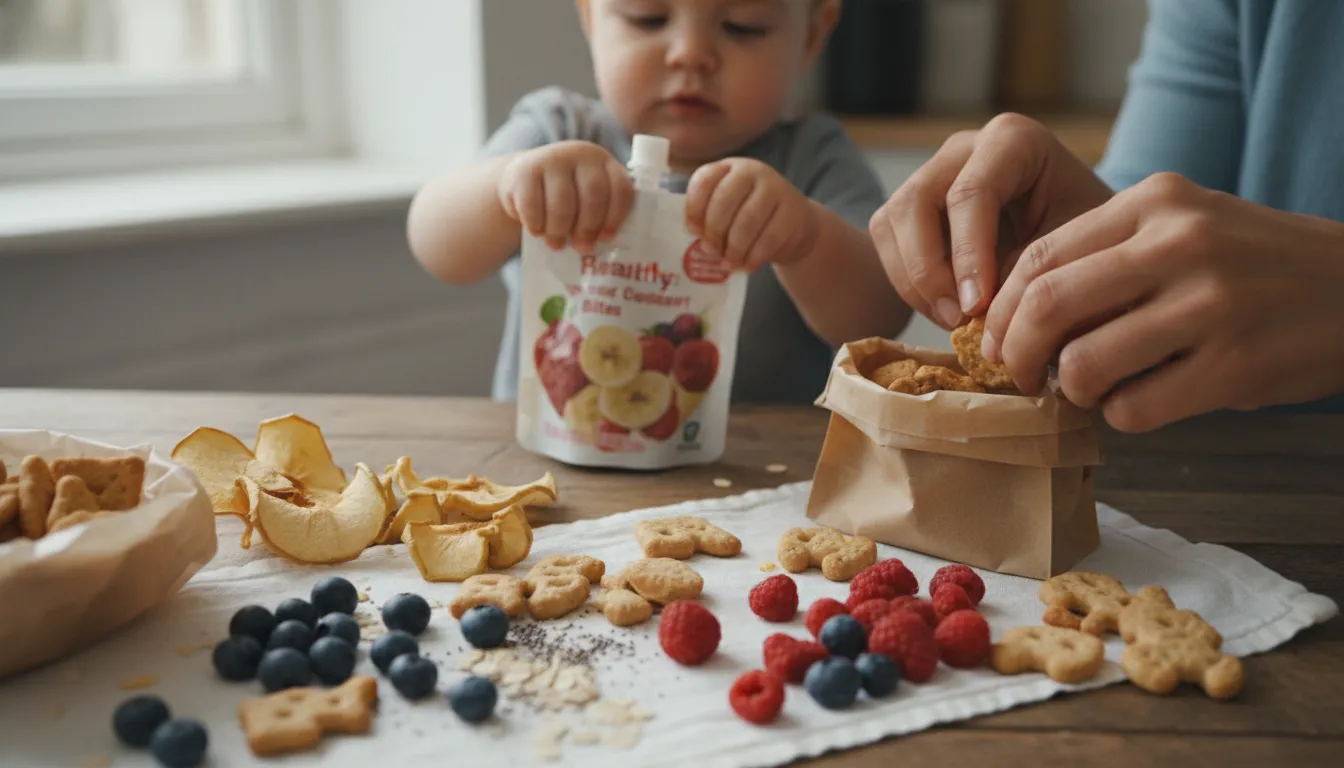
Busy parents need snacks that travel well. Whether you are heading to daycare, walking through the city, sitting in traffic, visiting family, running errands, or packing a stroller bag, store-bought baby snacks can be helpful. They are easy to carry, usually shelf-stable, and can save you when your baby gets hungry away from home.
But not every baby snack is a good everyday choice. Some are too sweet, too salty, too rice-heavy, or not appropriate for your baby’s stage. Others look clean on the front of the package but contain hidden sugar, juice concentrate, or mostly refined starch. The safest snacks are the ones that match your baby’s age, feeding skills, and nutrition needs while keeping ingredients simple.
At Clean Baby Bites, we believe clean feeding should work in real life. Store-bought snacks can fit into a healthy routine when parents choose carefully and use them as part of a varied diet.
What Makes a Baby Snack Safe?
A safe baby snack should be age-appropriate, easy for your baby to manage, low in added sugar, low in sodium, and made with simple ingredients. It should also match your baby’s feeding stage. A snack that is safe for a toddler may not be safe for a younger baby just starting solids.
Texture matters as much as ingredients. Some snacks dissolve easily, while others are dry, hard, sticky, or round. Hard crackers, whole nuts, popcorn, sticky fruit snacks, large chunks, and round foods can be choking hazards.
The CDC’s guidance on foods and drinks to limit reminds parents to avoid choking hazards and limit foods with added sugars and high sodium. This is a helpful reminder that “baby-friendly” marketing does not always mean a product is right for your baby.
When buying snacks, think about safety first, convenience second, and marketing last.
Read the Ingredient List Carefully
The front of a snack package may say “organic,” “natural,” “made with real fruit,” “veggie,” or “no artificial flavors.” Those words can sound reassuring, but the ingredient list matters more.
Ingredients are listed by weight. If rice flour, apple juice concentrate, cane sugar, brown rice syrup, or fruit puree appears near the beginning, the snack may not be as balanced as it looks. A spinach-flavored puff may still be mostly rice flour. A fruit bar may be mostly dates and juice concentrate. A yogurt melt may include added sugar.
A cleaner snack usually has a shorter, clearer ingredient list. Look for whole grains, legumes, fruits, vegetables, dairy, or other recognizable ingredients. Avoid snacks with added sweeteners, unnecessary salt, artificial colors, or dessert-style flavors.
Parents can use Clean Baby Bites’ clean baby foods guide for more help choosing simple foods and understanding labels.
Avoid Added Sugar
Babies do not need added sugar in snacks. Sweet snacks may make babies more likely to prefer very sweet flavors and less willing to try savory foods.
Added sugar can appear under many names, including cane sugar, fruit juice concentrate, apple juice concentrate, grape juice concentrate, brown rice syrup, date syrup, agave, maple syrup, molasses, coconut sugar, and honey. Honey should never be given to babies under 12 months because of the risk of infant botulism.
The American Academy of Pediatrics explains that children under 2 should avoid added sugars. Their guidance on added sugar in children’s diets is useful for parents who want to build better early food habits.
Whole fruit can be part of baby feeding. The concern is snack products that use sweeteners or concentrated fruit ingredients to make babies expect every snack to taste like dessert.
Watch Sodium Levels
Store-bought snacks can also contain more sodium than parents expect. Babies do not need salty crackers, chips, processed snack foods, or adult-style packaged foods. Their taste preferences are still developing, and many salty foods are not designed for infant nutrition.
When choosing packaged snacks, check the sodium line on the nutrition label. Choose low-sodium or no-added-salt options when possible. Also watch ingredient lists for salt, cheese powders, seasoning blends, and savory flavorings.
A clean baby snack should not taste like an adult snack. Babies can enjoy simple flavors without added salt.
Be Careful with Rice-Based Snacks
Many baby snacks are rice-based because rice flour creates a light texture that dissolves easily. Puffs, teething wafers, crackers, and cereals may all contain rice. These snacks can be convenient, but they should not become the main snack every day.
Rice can absorb arsenic from soil and water more than many other grains. The American Academy of Pediatrics’ HealthyChildren.org guide on heavy metals in baby food recommends offering a variety of grains and limiting overreliance on rice-based foods.
If your baby enjoys puffs or wafers, rotate them with oat-based, chickpea-based, lentil-based, or other non-rice options when available. Also offer real soft foods when possible.
The goal is not to panic over one rice snack. The goal is to avoid making rice-based snacks the everyday default.
Choose Snacks That Support Real Food Learning
Baby snacks should help your baby learn to eat, not only keep them quiet. Store-bought snacks can be useful, but they should not replace regular meals, texture practice, and exposure to real foods.
Look for snacks that support chewing practice, self-feeding, and flavor variety. Depending on your baby’s age and readiness, this might include soft teething crackers that are not rice-based, low-sugar oat snacks, freeze-dried fruit that softens safely, or simple puree pouches used occasionally.
But store-bought does not always mean better. When practical, soft foods like banana, avocado, steamed vegetables, plain yogurt, scrambled egg, or soft beans may be more nourishing than packaged snacks.
For baby-friendly meal and snack ideas, visit Clean Baby Bites’ recipes and meal ideas.
Pouches Can Be Useful, but Use Them Wisely
Puree pouches are one of the most common on-the-go baby foods. They are easy to carry and helpful during travel, errands, or daycare. They can be part of a clean feeding routine, but they should not become the only snack.
Many pouches are mostly sweet fruit puree, even when vegetables are shown on the front. Read the ingredient list to see what the pouch is really made from. If apple, pear, or banana is first, it will likely taste mostly sweet.
Choose pouches with no added sugar, no added salt, and varied ingredients. Look for some vegetable-forward or protein-containing options, such as blends with lentils, beans, yogurt, or vegetables.
When possible, squeeze the pouch into a bowl and offer it with a spoon. This helps your baby see, smell, and interact with the food instead of only sucking it down.
Freeze-Dried Fruit Snacks
Freeze-dried fruit can be convenient because it is lightweight, shelf-stable, and often made from one ingredient. However, texture matters. Some freeze-dried fruits can be crisp and dry, which may not be appropriate for younger babies.
For babies who are ready, freeze-dried fruit should be offered in safe sizes and may need to be softened with water, yogurt, or puree. Avoid hard or large pieces that could be difficult to manage.
Freeze-dried fruit is still fruit, but it can be more concentrated than fresh fruit. Use it as a snack sometimes, not as the only fruit option. Fresh or cooked fruit in safe textures gives babies more moisture and a more complete eating experience.
Unsweetened Yogurt Options
Plain full-fat yogurt can be a healthy baby snack when dairy has been introduced safely and your baby tolerates it. Store-bought single-serve plain yogurts can be convenient, but many baby and toddler yogurts are sweetened.
Choose plain, unsweetened yogurt when possible. Avoid honey-sweetened yogurt for babies under 12 months. Be careful with yogurt melts, which may contain added sugar or fruit juice concentrate.
Plain yogurt can be served with mashed fruit, oatmeal, or soft cooked vegetables. If taking yogurt on the go, keep it cold with an insulated bag and ice pack.
For feeding gear that helps with travel snacks, visit Clean Baby Bites’ feeding gear guide.
Oat-Based Snacks
Oat-based snacks can be a better alternative to rice-heavy snacks, especially when they are low in sugar and easy for your baby to manage. Some baby crackers, bars, or soft baked snacks use oats as a main ingredient.
However, not all oat snacks are clean. Some include added sugar, syrups, fruit concentrates, or chocolate-style flavoring. Read the label carefully.
For younger babies, texture is important. Some oat bars may be too sticky, dense, or crumbly. Choose snacks that match your baby’s feeding skills and always supervise eating.
Oats are also easy to use at home. If you want a simple travel snack, soft oatmeal portions or oat-based homemade bites may work when prepared safely.
Legume-Based Snacks
Some newer baby snacks use chickpeas, lentils, peas, or beans as ingredients. These can provide more protein and fiber than snacks made mostly from rice flour or refined starch.
Still, label reading matters. A snack may contain a small amount of lentil powder but still be mostly starch. Look for products where legumes are meaningful ingredients and added sugar or salt is low.
Legume-based snacks can be helpful for variety, but babies should also experience real lentils, beans, and peas in soft textures when possible.
Clean feeding is strongest when packaged snacks support a broader diet instead of replacing real meals.
Teething Crackers and Wafers
Teething crackers and wafers are popular for on-the-go use because they are easy to pack and can keep babies busy. But many are rice-based or sweetened. Some may also break into pieces that are not ideal for every baby.
Check ingredients carefully. Choose options with no added sugar, low sodium, and minimal rice-based ingredients when possible. Watch your baby closely while eating because even dissolvable snacks can become risky if pieces break off or your baby stuffs too much in their mouth.
Teething snacks should not replace safe teething toys or regular meals. They are convenience foods, not nutrition essentials.
Avoid Sticky Fruit Bars for Younger Babies
Fruit bars may look healthy because they are made with dates, raisins, apples, or berries. But many are sticky, dense, and very sweet. Sticky textures can be difficult for babies to manage and may cling to teeth as teeth come in.
These bars may also teach babies to expect very sweet snacks. Even without added sugar, dried fruit-based snacks can taste candy-like.
For younger babies, soft fresh fruit prepared safely is usually better. For older babies or toddlers, fruit bars may be occasional snacks, but they should still be chosen carefully.
Snack Safety While Traveling
On-the-go feeding can create safety risks. Babies should not eat while lying down, crawling, running, or riding unattended in a stroller or car seat. Eating should be supervised.
It may be tempting to hand a snack to a baby during a car ride, but choking can be harder to notice and respond to when driving. If your baby needs to eat, stop safely and supervise.
Choose snacks that are easy to serve in a calm setting. Carry wipes, a bib, a clean spoon, a small bowl, and water for cleanup when appropriate.
Clean feeding is not only about ingredients. It is also about safe eating conditions.
Store Snacks Properly
Store-bought snacks should be kept sealed and dry. Once opened, use clips or airtight containers to keep them fresh. Do not use snacks that smell stale, look damp, or have changed texture.
For perishable snacks like yogurt, cheese, or prepared foods, use an insulated bag and cold pack. Do not leave perishable foods in a hot stroller, car, or diaper bag for long periods.
The FDA’s guide on food safety once baby arrives reminds parents that safe storage and clean utensils matter when feeding babies.
Snack safety continues after purchase.
Build a Simple On-the-Go Snack Kit
A clean snack kit can make busy days easier. Include a few shelf-stable options, a small bowl, soft spoon, bib, wipes, water for cleaning, and a container for leftovers or trash.
Good store-bought options may include simple pouches, low-sugar oat snacks, non-rice teething crackers, plain unsweetened yogurt kept cold, or freeze-dried fruit softened safely. Pair packaged snacks with fresh foods when possible.
For urban parents, stroller-friendly and daycare-friendly snacks matter. Clean Baby Bites’ urban parenting and feeding page can help parents build realistic routines for city life.
Do Not Let Snacks Replace Meals
Snacks are helpful, but they should not replace meals too often. Babies need opportunities to eat iron-rich foods, vegetables, fruits, proteins, healthy fats, and varied textures. If snacks fill them up, they may be less interested in more nourishing meals.
Use snacks as support between meals or during outings. Keep portions small and age-appropriate. Offer water with solids when appropriate for your baby’s age and guidance.
Breast milk or formula remains the main nutrition source during early solids. As babies grow, solids become more important, but snack quality still matters.
Final Thoughts
Safe store-bought snacks can be useful for babies on the go, but parents should choose carefully. Look for snacks with simple ingredients, no added sugar, low sodium, age-appropriate textures, and minimal reliance on rice-based ingredients. Read the back of the package instead of trusting the front.
Good options may include carefully chosen pouches, low-sugar oat snacks, plain unsweetened yogurt kept cold, legume-based snacks, non-rice crackers, and freeze-dried fruit prepared safely. But real soft foods like avocado, banana, cooked vegetables, beans, eggs, and oatmeal should still be part of the routine when possible.
Clean feeding does not mean avoiding convenience. It means using convenience wisely.
For more baby feeding guidance, visit the Clean Baby Bites blog or explore the Clean Baby Bites FAQ for answers about clean foods, feeding gear, toxins, and starting solids.