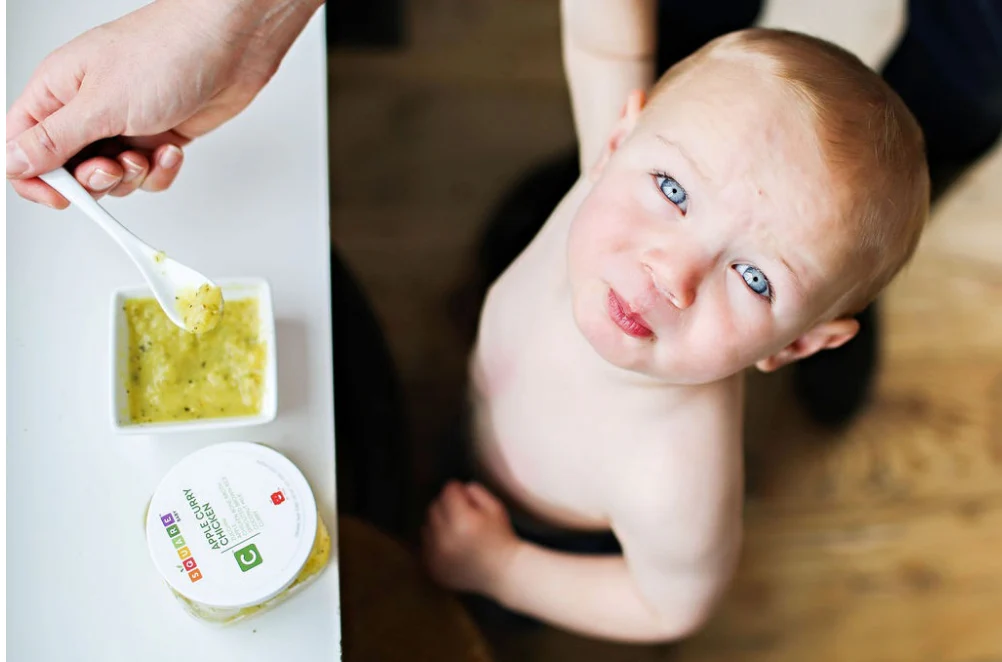
When you’re ready to add protein to your baby’s plate, the priority is to choose options that are iron-rich, easily digestible, and prepared in a way that eliminates choking hazards. At around six months, babies need iron-rich foods, and animal-based proteins—such as meat, poultry, and fish—are some of the most bioavailable sources available.
Here are the safest, most nutritious ways to introduce protein during those first few months of solids.
1. Finely Minced or Pureed Meats
Meat is an excellent source of iron and zinc, which are crucial for your baby’s rapid development.
- The Preparation: For a beginner, “pureed” doesn’t have to mean flavorless. You can blend cooked chicken, turkey, or beef with a bit of breast milk, formula, or even bone broth to reach a smooth, thin consistency.
- The “Nervous Parent” Tip: If you are moving toward baby-led feeding, ensure the meat is cooked until very tender and either finely minced or shredded into tiny, manageable pieces that won’t get stuck in their throat. Avoid large chunks of tough steak or dry poultry, which can be difficult to manage early on.
2. Soft, Flaky Fish
Fish like salmon or cod are wonderful for brain development due to their omega-3 fatty acids.
- The Preparation: Steam or bake the fish until it is completely cooked through and flakes easily. Use your fingers to thoroughly inspect the fillet—even “boneless” fish can have tiny, hidden pin bones, so being extra diligent is key.
- The “Nervous Parent” Tip: Flaked fish is naturally very soft and breaks down easily in a baby’s mouth, making it one of the less intimidating proteins for new feeders. Stick to low-mercury options like salmon, cod, or trout.
3. Smoothly Mashed Legumes
Beans and lentils are fantastic plant-based protein sources, though they are often best paired with a vitamin C-rich food (like a few drops of orange juice or some steamed broccoli) to help your baby absorb the plant-based iron.
- The Preparation: Cook them until they are very soft—the skin should almost fall off—and then mash them into a silky puree.
- The “Nervous Parent” Tip: Start with lentils or mild white beans. Because they can be quite thick, always thin them down with a little liquid until your baby is comfortable with the texture.
4. Fully Cooked Eggs
Eggs are a nutrient powerhouse and very easy to prepare.
- The Preparation: Scramble an egg until it is fully cooked (no runny yolks) and mash it with a fork. You can mix it with a bit of plain, full-fat yogurt to make it even easier to swallow.
- The “Nervous Parent” Tip: Since eggs are a common allergen, many pediatricians now suggest introducing them early and often once you start solids. Keep an eye on your baby for a few days after the first taste to ensure there’s no reaction.
A Few “Golden Rules” for Safety
- Skip the Salt: Keep your baby’s protein sources free of added salt and heavy spices. Their kidneys are still developing, so keeping things simple is safer and helps them learn the true flavor of the food.
- Avoid Honey: Remember that honey should never be given to a baby under one year old due to the risk of botulism.
- Monitor for Reactions: Introduce one new protein at a time, waiting a couple of days in between to ensure your baby tolerates each one well.
Whether you are whipping up a batch of clean baby foods to keep in the freezer or preparing a fresh family dinner, protein is a vital building block. If you are looking for ways to integrate these into family meals, our recipes and meal ideas offer plenty of inspiration for simple, protein-packed dishes that the whole family can enjoy.
By focusing on soft textures and iron-rich variety, you are setting your baby up for a lifetime of healthy eating habits. If you ever feel uncertain about a specific food, don’t hesitate to consult your pediatrician or visit our FAQ page for more guidance on navigating these new, exciting nutritional milestones.