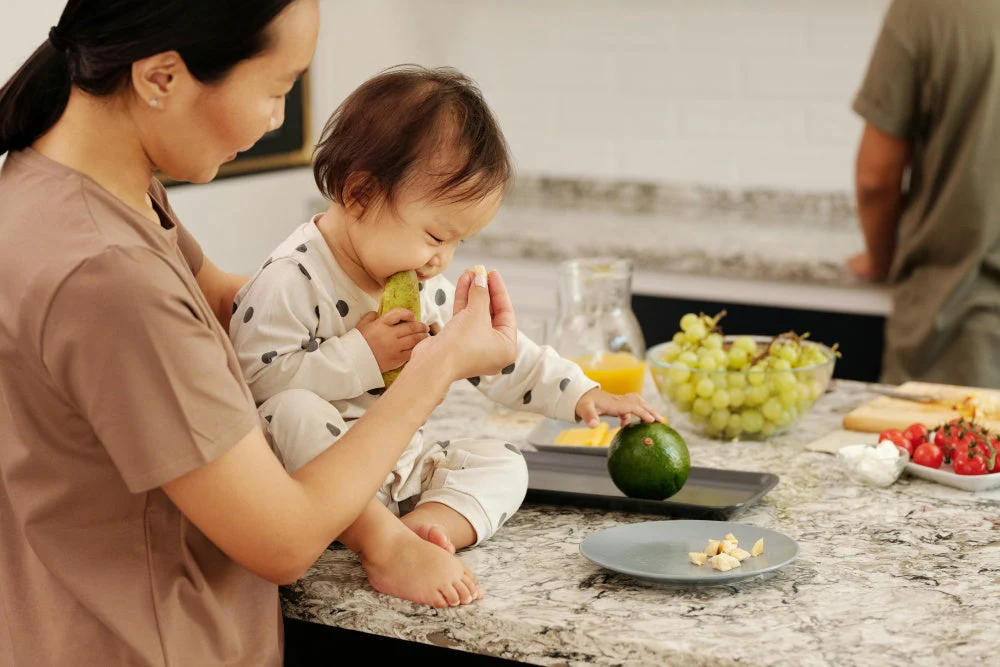
When you are first starting out, the goal is to choose foods that are naturally soft, easy to mash, and gentle on your baby’s digestive system. You want to prioritize items that allow your baby to practice the mechanics of eating without posing a significant choking risk.
Here are the best beginner-friendly fruits and vegetables to add to your grocery list.
1. The “Easy Mash” Fruits
These fruits require almost no preparation beyond peeling and mashing, making them perfect for those first few weeks of starting solids.
- Avocado: The undisputed king of first foods. It is packed with healthy fats and has a naturally creamy, butter-like consistency. It is very easy to mash with a fork and can be thinned with breast milk or formula if needed.
- Banana: Soft, portable, and naturally sweet, bananas are a hit with almost every baby. If you’re practicing baby-led feeding, you can leave a small piece of the peel on the bottom to give your baby a “handle” to hold while they gum the top.
- Ripe Pears: Pears are excellent for digestion. Make sure they are very ripe and soft. For a beginner, it is best to steam them slightly first—this softens the fibers and makes them much easier for your baby to process.
2. The “Steam and Mash” Vegetables
Vegetables are nutrient powerhouses, but they need a bit of preparation to ensure they are soft enough for a beginner.
- Sweet Potato: These are a fantastic first vegetable. They are mild, sweet, and have a smooth, velvety texture when steamed and blended. They are also incredibly nutrient-dense, providing a great boost of vitamins.
- Carrots: While raw carrots are a dangerous choking hazard, steamed carrots are perfect. Steam them until they are so soft you can easily mash them between your fingers. If you’re serving them as finger foods, cut them into large, “fry-shaped” sticks that are soft enough to squash.
- Zucchini: This is one of the easiest vegetables to cook and prepare. It has a high water content and a very mild flavor. Steaming it makes it melt-in-the-mouth soft, making it a great transition food as you explore recipes and meal ideas.
3. Tips for Preparing Beginner Produce
When you are selecting and preparing these first foods, keep these three safety rules in mind:
- Texture is Everything: If you can’t easily mash the food between your thumb and forefinger, it is likely too hard for your baby. When in doubt, steam it a little longer.
- Prioritize Quality: Because these foods make up the bulk of your baby’s early diet, it’s worth being mindful about sourcing. Look for organic options whenever possible to minimize exposure to pesticides. You can find more guidance on this in our guide to clean baby foods.
- Don’t Over-Process: You don’t need to puree everything into a liquid. Leaving a little bit of “lumpiness” is a great way to help your baby get used to different textures, which is an important part of their oral-motor development.
4. Creating a Safe Environment
Even with the perfect, softest fruit, the right environment is crucial. Ensure your baby is sitting upright and supported in their high chair, and always supervise them closely while they eat. Having the right feeding gear—specifically a chair that allows their feet to rest on a footrest—will help them maintain the stability they need to swallow safely.
The Bottom Line: Keep it Simple
You don’t need a pantry full of specialized ingredients. These simple, whole-food options are perfect for helping your baby learn the basics of chewing and swallowing. If you’re feeling unsure about whether a specific texture is “right,” take a look at our FAQ page for common questions about baby feeding safety.
Remember, the goal is to build a positive association with food. If your baby makes a face at a new flavor or just plays with their mashed avocado for twenty minutes, that is a successful meal. They are learning, they are exploring, and they are doing exactly what they need to do.