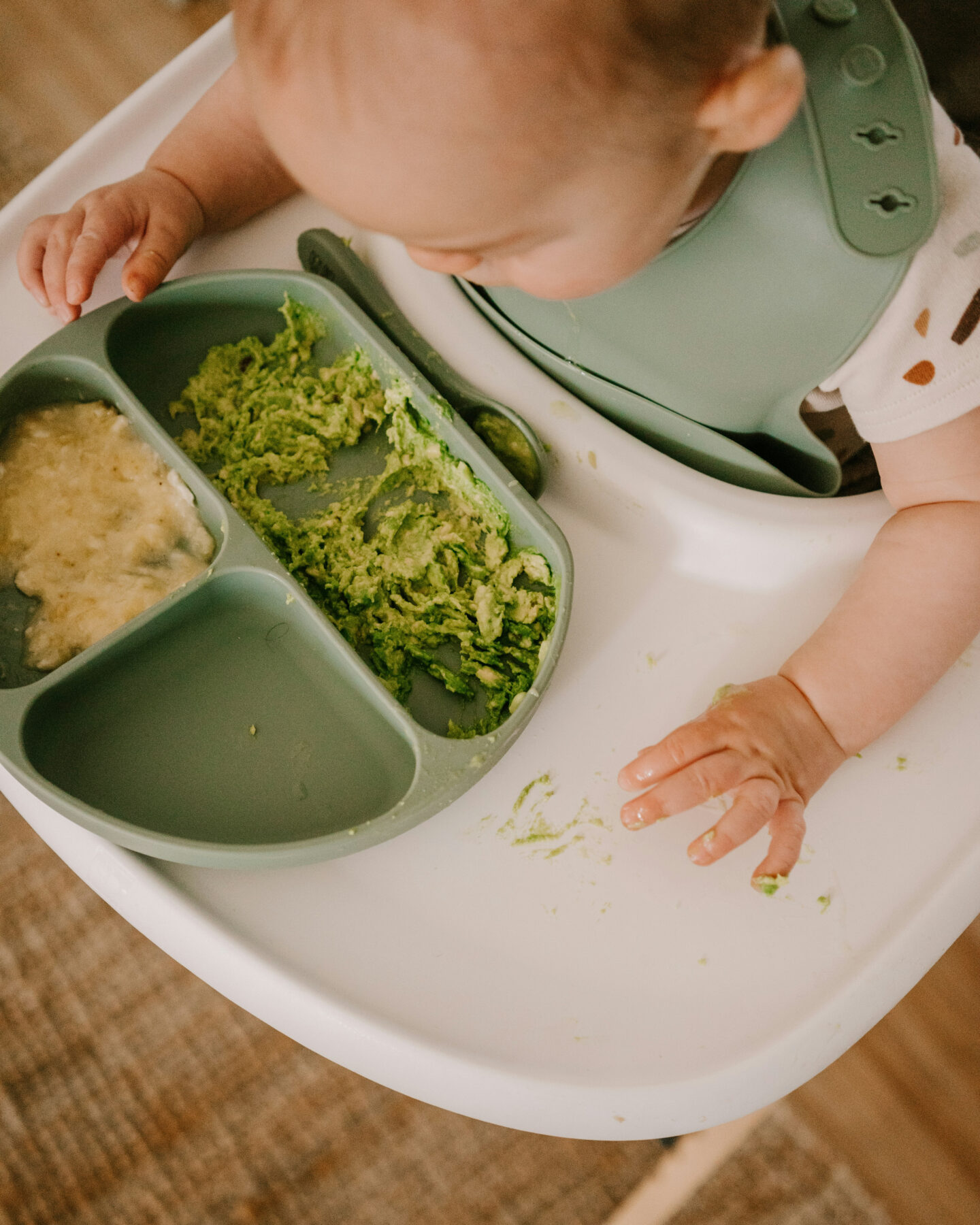
Feeding your baby should feel like a shared discovery, not a high-stakes clinical trial. When we get too focused on “milestones,” “nutritional targets,” or “perfect cleanup,” we lose sight of the fact that this is a playful, sensory-filled introduction to the world.
If you find yourself holding your breath every time your baby takes a bite, it’s time to shift your perspective. Here is how to keep the process light, fun, and manageable for everyone.
1. Let Go of the “Full Meal” Expectation
For the first few months, your baby’s nutritional needs are still largely met by breast milk or formula. Treat solid food as “practice.” If they only eat three bites of mashed sweet potato and spend the rest of the time squishing it between their fingers, they have succeeded. They explored, they felt, and they tasted. When you stop worrying about how many ounces they consumed, you’ll find that the tension at the table melts away.
2. Embrace the “Sensory Play” Mindset
Babies don’t just eat with their mouths; they eat with their hands, their faces, and even their hair. Instead of trying to keep them perfectly clean throughout the meal, view the mess as a vital part of the developmental process.
- The “One-Bib” Rule: Use a high-quality, easy-to-clean bib. If you aren’t stressed about their outfit getting stained, you’ll be much more likely to let them dive in and investigate their food. Check out our feeding gear recommendations for items that actually make cleanup a breeze rather than a battle.
3. Keep the Atmosphere Relaxed
Your baby is a mirror for your energy. If you are leaning in, staring intensely, and waiting for them to open their mouth, they can sense that pressure.
- Eat With Them: The most effective way to teach a baby to eat is by letting them see you eat. Sit down with your own plate, chat, and enjoy your food. When they see you enjoying a meal, they naturally want to join in.
- Play Music or Talk: Treat mealtime like a social event. Keep the conversation light and upbeat. If the mood in the room is fun, the high chair becomes a place they want to be.
4. Vary Your Approach
Feeding doesn’t always have to be a high-chair affair. On a sunny weekend morning, maybe a picnic on the floor with some soft, easy finger foods is more fun than a formal seated meal. Keep your starting solids journey flexible. If you are tired of purees, try a recipe or meal idea that feels more like a fun “tasting flight” of different textures and colors.
5. Prioritize “Clean” Over “Perfect”
Anxiety often stems from worrying about what is in the food—pesticides, heavy metals, or hidden additives. When you are confident in the quality of the food you are serving, you can relax. Focusing on clean baby foods allows you to focus on the joy of the interaction rather than the list of ingredients. When you know the source is safe, you can stop “policing” every single bite and just be a parent.
6. Know When to Stop
Sometimes, the most “fun” thing you can do is end the meal early. If your baby starts throwing food, arching their back, or looking away, they are telling you they are done. Pushing for “just one more bite” is a quick way to turn a positive experience into a power struggle. A happy ending to the meal, even if it’s brief, keeps them looking forward to the next one.
Stay Grounded
Navigating the world of infant feeding—especially in urban parenting feeding environments where space and time are limited—can feel like a challenge. But remember: you are doing a great job. Your baby is curious, you are supportive, and the “mess” is just evidence of a learning brain.
For more tips on how to keep your routine balanced, browse our blog for fresh perspectives on modern parenting. Keep it simple, keep it messy, and most importantly, keep it fun.